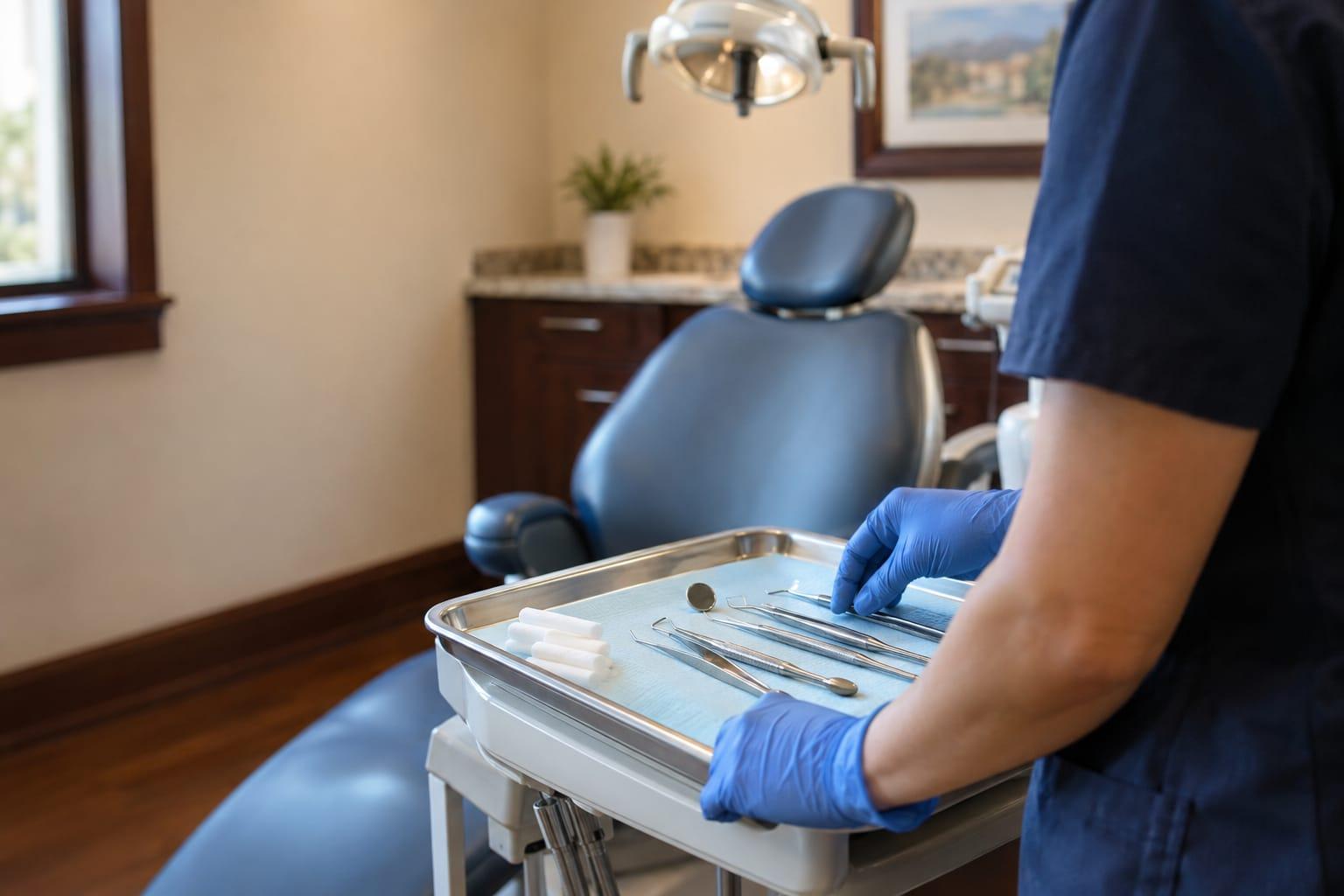
Exams and cleanings
Each checkup includes a professional cleaning and an exam of your teeth, gums, bite and jaw joints, plus an oral cancer screening. Dr. May explains what he sees in plain language and shows you on screen.
Digital X-rays
Digital X-rays reveal decay between teeth, problems below the gumline and bone changes that can't be seen in the mirror, using far less radiation than traditional film.
Curodont™: drill-free treatment for early cavities
For decades, the only real options for a cavity were to "watch it" or drill it out and fill it. Curodont™ is a newer, minimally invasive approach that lets us treat many early cavities without drilling, without numbing and without removing any healthy tooth.
How it works
Curodont is built on a self-assembling peptide, a tiny protein fragment designed to mimic the proteins your body used to build enamel in the first place. When it's applied to an early cavity, the peptide soaks into the weakened, porous enamel and links together into a 3D framework inside the lesion. That framework acts like scaffolding, attracting calcium and phosphate minerals from your saliva so new enamel crystals can form from the inside out.
The result is guided enamel regeneration: rather than just protecting the surface, as fluoride does, Curodont helps rebuild the weakened enamel within the cavity itself.
- Early cavity. Acids pull minerals out, leaving weak, porous enamel under an intact surface.
- Scaffold forms. The peptide soaks in and self-assembles into a 3D framework that draws in calcium and phosphate.
- Enamel rebuilt. New enamel crystals grow along the scaffold, rebuilding the tooth from within.
What the visit is like
- The tooth is cleaned and prepared
- The liquid is applied to the surface and given a few minutes to soak in
- No drilling, no needles, no numbing
- We monitor the area with photos and X-rays at future checkups
Who it's for
Curodont works on early cavities that haven't broken through the enamel yet, including early decay between teeth and white spots. That's one more reason regular checkups and digital X-rays matter: the earlier we find a cavity, the more likely we can treat it without a drill. Treating cavities without drilling
Gum (periodontal) therapy
Bleeding or puffy gums can be early signs of gum disease. Deep cleaning below the gumline and a personalized maintenance schedule help keep the bone and gums that support your teeth healthy.
Fluoride and sealants
Fluoride strengthens enamel, and sealants protect the deep grooves of back teeth where cavities often start. Both are quick and comfortable, for kids and adults alike.
Common questions
Can you really treat a cavity without drilling?
If it's caught early, often yes. Curodont treats early cavities that haven't broken through the enamel. Once a cavity has formed a hole, it needs to be repaired with a filling or bonding.
How often should I come in?
Most patients do well with a checkup and cleaning every six months. If you have gum disease or a higher risk of cavities, we may recommend more frequent visits.
Do you see children?
Yes. We care for children, adults and seniors.

Reviewed by Dr. Christian May, DDSGeneral & restorative dentist, Glenview, IL