What's going on
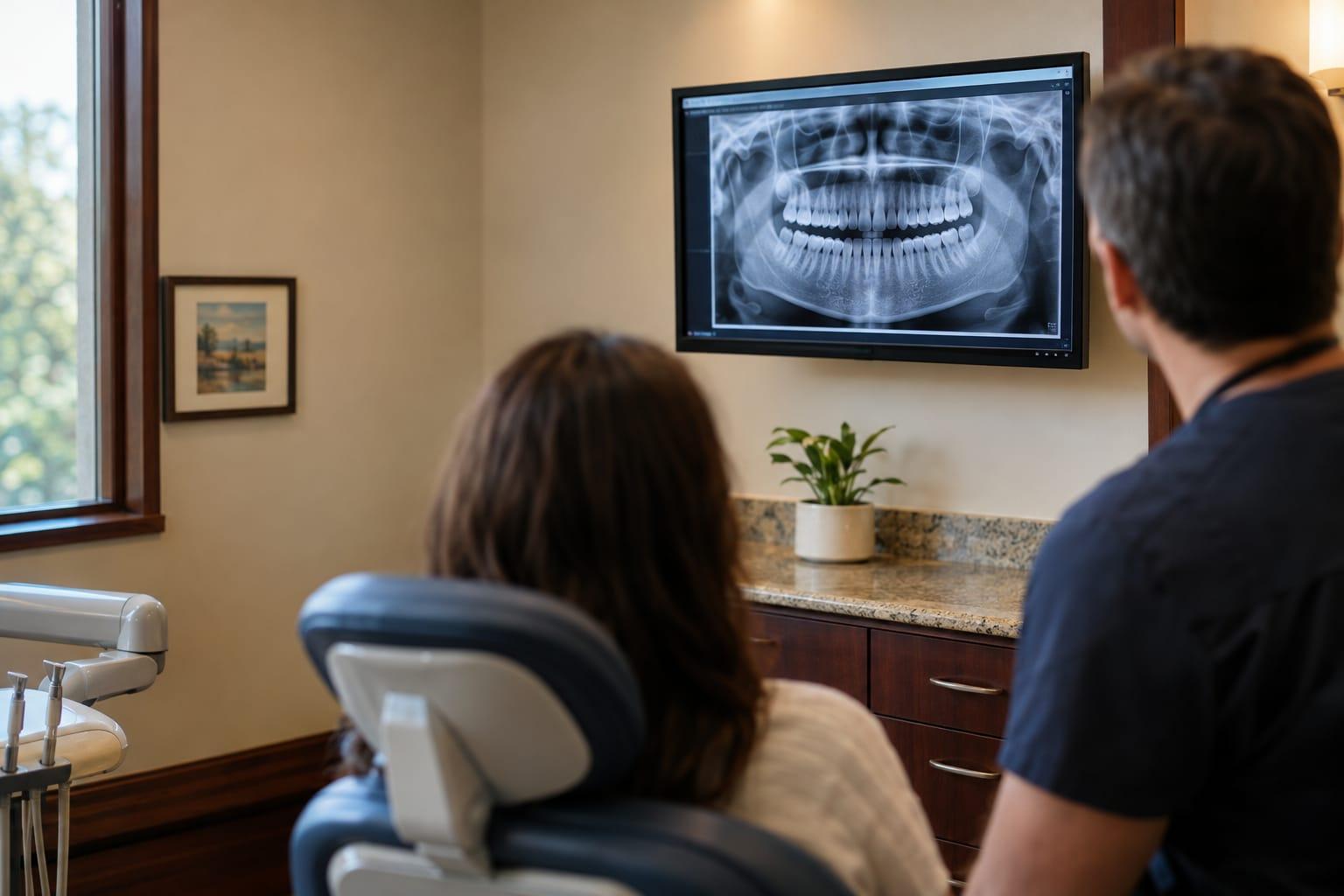
A cavity starts long before there's a hole. Acids from bacteria first pull minerals out of the enamel, leaving a weak, porous area. At this stage it may show up as a chalky white spot, or as a shadow between teeth on an X-ray, and usually doesn't hurt.
If nothing changes, the weakened enamel eventually collapses into a true cavity that needs a filling. The window before that happens is where minimally invasive treatment works best.
What you can do right now
- Brush twice a day with fluoride toothpaste
- Floss daily, since many early cavities start between teeth
- Cut back on sugary snacks and sipping sweet or acidic drinks throughout the day
- Keep up with regular checkups and X-rays so problems are found early
Schedule a checkup if it's been more than six months, or if you notice new white spots, rough areas or sensitivity. Early cavities rarely hurt, so regular exams are the best way to catch them.
How we can help
After an exam, Dr. May will explain what he finds and walk you through your options. Depending on the cause, treatment may include:
- Early cavity. Acids pull minerals out, leaving weak, porous enamel under an intact surface.
- Scaffold forms. The peptide soaks in and self-assembles into a 3D framework that draws in calcium and phosphate.
- Enamel rebuilt. New enamel crystals grow along the scaffold, rebuilding the tooth from within.
Fluoride treatment
Strengthens the enamel surface and supports remineralization.
Sealants
Protect the deep grooves of back teeth where cavities often start.
Composite bonding
If a cavity has already broken through the enamel, a conservative tooth-colored restoration repairs it while preserving as much healthy tooth as possible.
Common questions
Does Curodont hurt?
No. There's no drilling and no needles. The liquid is simply applied to the tooth.
Can Curodont fix any cavity?
No. It's for early cavities that haven't broken through the enamel. Larger cavities still need a filling or other restoration.
Is it safe for children?
Yes. Because it's drill-free and needle-free, it's especially well suited to kids. We'll let you know if your child is a good candidate.

Reviewed by Dr. Christian May, DDSGeneral & restorative dentist, Glenview, IL