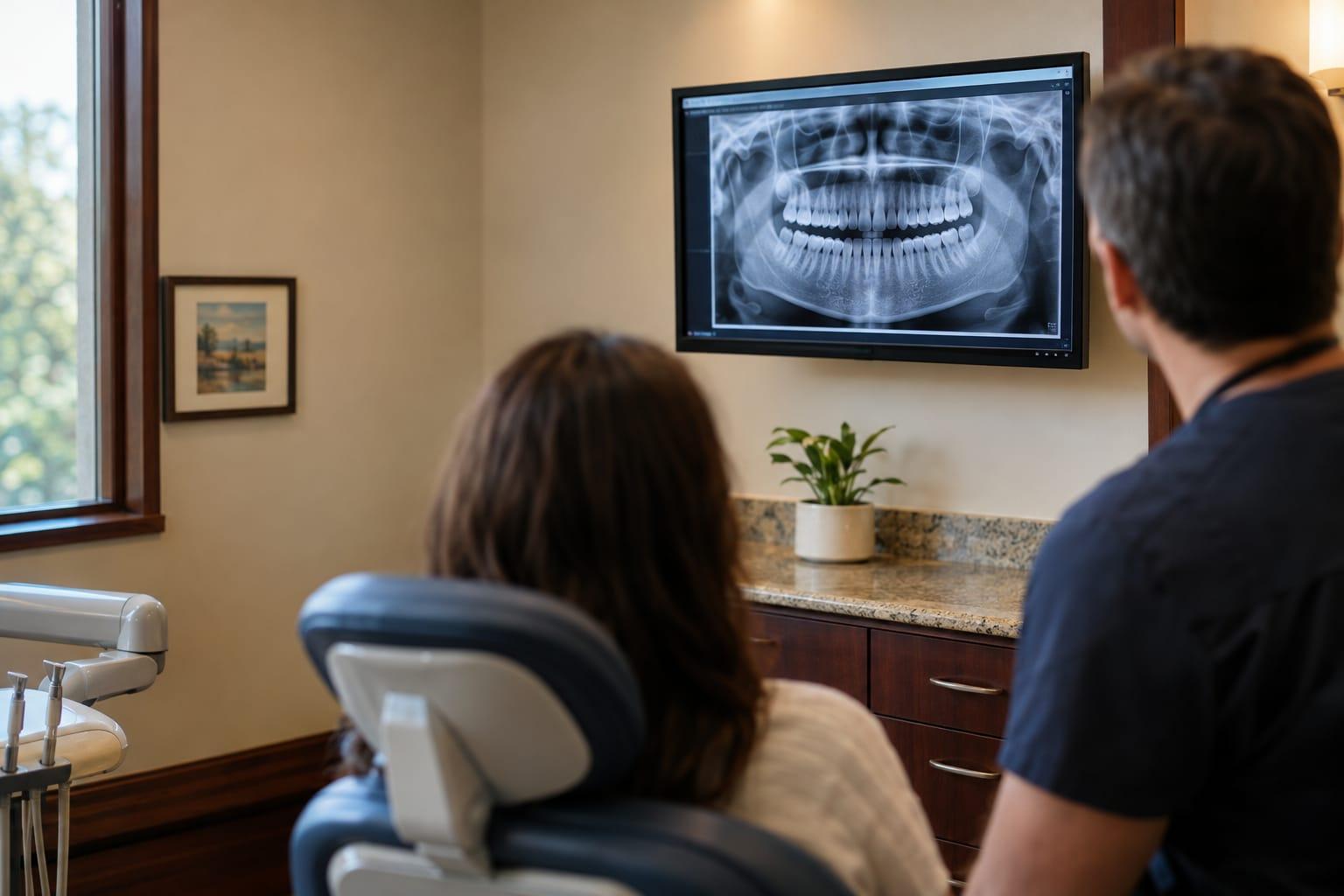
What's going on
Signs you may be grinding or clenching:
- A partner hears grinding at night
- Sore jaw or headaches when you wake up
- Flat, worn, chipped or cracked teeth
- Sensitive teeth or broken fillings
Stress, an uneven bite, some medications, caffeine and alcohol, and sleep-breathing problems can all contribute.
What you can do right now
- Notice daytime clenching and keep your teeth apart when you're not eating
- Cut back on caffeine and alcohol in the evening
- Avoid chewing gum and non-food items like pens
If you've noticed wear, chips or morning jaw pain, schedule an exam. Protecting your teeth now prevents larger repairs later.
How we can help
After an exam, Dr. May will explain what he finds and walk you through your options. Depending on the cause, treatment may include:
Custom night guard
Fitted to your bite to protect your teeth and reduce strain on your jaw muscles.
Bite evaluation and adjustment
An uneven bite can trigger grinding. Evening it out can reduce the load on your teeth.
Airway and sleep-breathing screening
Grinding can be linked to breathing problems during sleep. We screen and coordinate with your physician.
Repair of worn teeth
Bonding, crowns or full-mouth rehabilitation rebuild teeth that are already worn.
Common questions
Are store-bought night guards OK?
They can protect teeth short-term, but a soft, ill-fitting guard can sometimes increase clenching. A custom guard is adjusted to your bite.

Reviewed by Dr. Christian May, DDSGeneral & restorative dentist, Glenview, IL